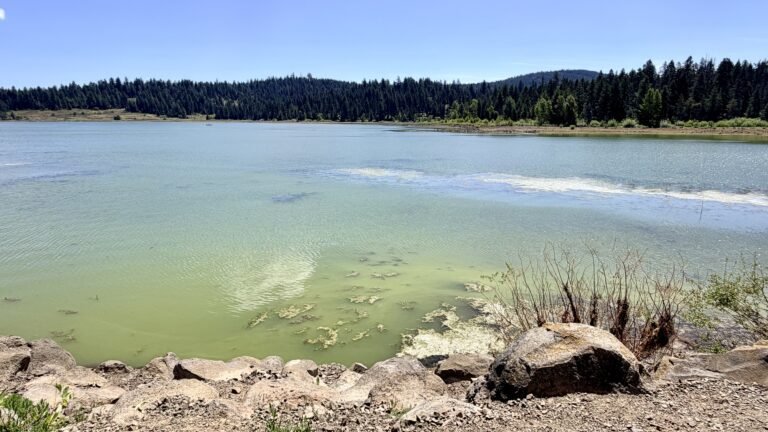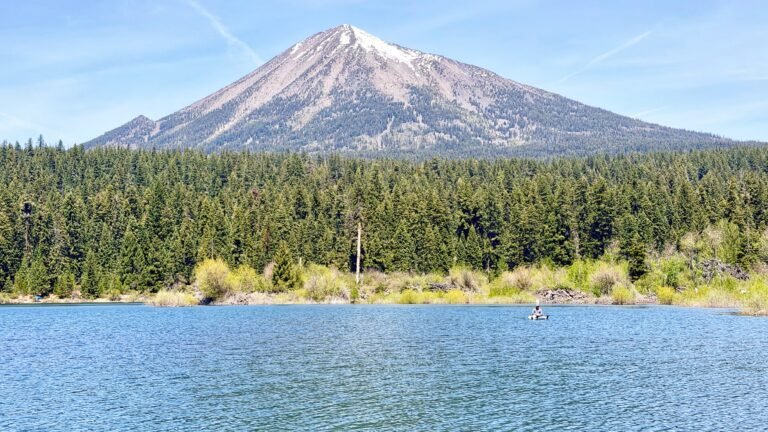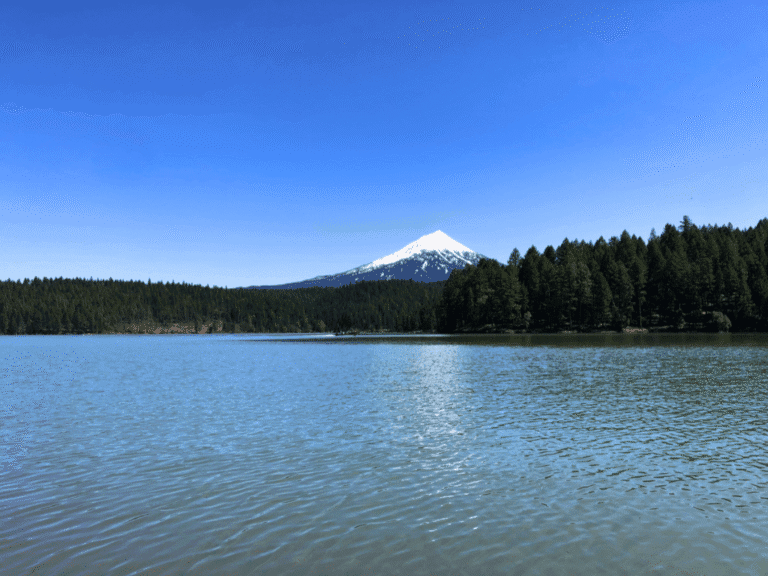
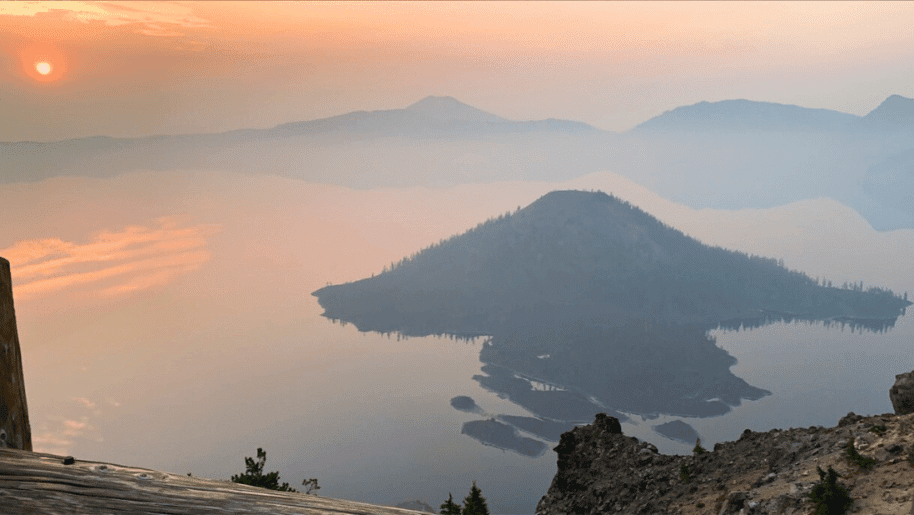
I don’t think I’m alone in saying I have a love/hate relationship with Southern Oregon in the summer. Lakes, rivers, and mountains right outside your door. Also outside your door a good chunk of the summer? Wildfire smoke. Some years are better than others. 2025 was a minimal wildfire year, but I’m afraid that with the extreme lack of snow, 2026 might be gearing up to be a bad one. Between July and September, it’s pretty common for smoke from fires up to hundreds of miles away to settle over our valleys and waterways for days or weeks at a time.
So, when the wildfire smoke is drifting across the state, what should you do? Is it safe to paddle, or to exercise in general?
Here are a few things to consider.
Understanding Air Quality Index (AQI) Levels
The Air Quality Index runs from 0 to 500, but you only need to memorize a few threshold numbers. Think of AQI like water temperature—there are ranges where you’re comfortable, ranges where you need extra gear, and ranges where getting in the water is just a bad idea.
0-50 (Green): Go paddle. Air quality is good. No concerns for anyone.
51-100 (Yellow): Still fine for most people. If you have asthma or respiratory issues, you might notice mild irritation during intense effort, but generally safe for paddling.
101-150 (Orange): Here’s where it gets interesting. This is “unhealthy for sensitive groups.” If you’re healthy with no lung issues, moderate exercise like recreational paddling is usually okay. But if you have asthma, heart disease, or you’re older or younger than the typical adult range, this is where you start making different choices.
151-200 (Red): Time to rethink your plans. Everyone starts experiencing effects at this level. Your healthy lungs will notice. Outdoor exercise isn’t recommended for anyone. This is the threshold where “Is it safe to exercise in smoke?” gets a clear answer: not really.
201+ (Purple and beyond): Absolutely not. This is hazardous air. Stay inside. The lake will be there when the smoke clears.
What Actually Happens When You Exercise in Smoky Air
Your breathing rate increases about 10-15 times during moderate exercise compared to sitting on your couch. When you’re paddling across a lake, you’re pulling significantly more air—and whatever’s in that air—deep into your lungs.
Wildfire smoke contains particulate matter (PM2.5), which are particles so small they bypass your body’s natural filtering system. These particles lodge deep in your lungs and can enter your bloodstream. According to research from the University of Washington, even short-term exposure to elevated PM2.5 during exercise can cause:
-
- Decreased lung function lasting several days
-
- Increased inflammation in airways
-
- Cardiovascular stress beyond normal exercise levels
-
- Elevated heart rate compared to exercising in clean air
One 2021 study of outdoor athletes in California found that exercising at AQI levels above 150 produced measurable decreases in performance and oxygen uptake. Translation: you work harder, feel worse, and gain less fitness benefit.
The effects aren’t always immediate or obvious. You might finish your paddle session feeling fine, then wake up the next morning with a persistent cough or chest tightness that lasts for days.
The Oregon-Specific Reality
Oregon’s geography creates smoke-trapping conditions that don’t exist everywhere. Our valleys funnel smoke and hold it. The Cascade lakes sit in natural bowls. Coastal areas usually stay clearer due to marine air, but inland locations—Bend, Medford, Klamath Falls, the Willamette Valley—can experience prolonged smoke events.
In August 2023, Crater Lake’s AQI hit 247 for three consecutive days. In 2020, parts of Portland recorded AQI levels above 400. These aren’t rare anomalies anymore; they’re part of Oregon’s summer pattern.
Here’s something counterintuitive: AQI can vary wildly within the same region. Bend might show 85 while Elk Lake, 30 minutes away, sits at 165. Monitor conditions at your specific destination, not just your starting point.
Check these resources before you leave:
-
- AirNow.gov (provides real-time AQI by location)
-
- Your county’s air quality alerts
Ok, You’re Just Gonna Paddle Anyway
Let’s be honest: sometimes you’re going to paddle anyway. Maybe you only get one weekend a month. Maybe you drove three hours. Maybe you just really need to be on the water.
If AQI is in the 101-150 range and you’re going to paddle despite recommendations, here’s how to reduce risk:
Shorten your session. Instead of your usual two-hour paddle, do 45 minutes. Get your time on the water, then get out.
Lower your intensity. This isn’t the day for interval training or pushing for distance PRs. Cruise at a conversational pace. Your elevated breathing rate is the risk factor, so keep it moderate.
Paddle early morning. Smoke often settles overnight and burns off slightly in early morning before intensifying again by afternoon. Check AQI trends throughout the day.
Watch for symptoms. Chest tightness, persistent coughing, shortness of breath beyond normal exertion, or dizziness mean stop immediately. Don’t tough it out.
Wear a mask on shore. Loading and unloading your board creates exertion, too. A KN95 or N95 mask worn while you’re setting up and breaking down provides some protection.
Who Shouldn’t Paddle in Elevated Smoke
Some people need to be more conservative with these thresholds:
-
- Anyone with asthma or COPD (even well-controlled)
-
- People with cardiovascular conditions
-
- Pregnant women
-
- Adults over 65
-
- Anyone recovering from respiratory infections
For these groups, the “unhealthy for sensitive groups” designation (AQI 101-150) is a hard stop, not a judgment call.
What About Indoor Alternatives?
When wildfire smoke settles in for a week-long stay, you need backup plans. Oregon paddlers get creative:
-
- Indoor pools (practice your SUP fitness with pool running or swimming)
-
- Gym sessions focusing on paddling-specific strength
-
- Yoga and mobility work you’ve been neglecting
-
- Planning and research for future paddle destinations
-
- Board maintenance and gear organization
These aren’t exciting alternatives, but they keep you ready for when conditions improve.
The Bottom Line
Is it safe to exercise in smoke? At AQI levels below 100, yes, for most healthy adults. Between 101-150, you’re entering elevated risk territory where the safer answer is no for sensitive groups and “probably not worth it” for everyone else. Above 150, the answer is clearly no for everyone.
Oregon’s fire seasons aren’t going away, it’s just part of living and recreating in Oregon. Check conditions before every session. Have backup plans. Protect your lungs for the long term.
Before your next paddle: Bookmark AirNow.gov and check it the morning of your session. Download a local air quality app. Know your threshold. The best paddle days are the ones where you can breathe freely, on the water and for days afterward